🔄
Best Cribs in Canada: 2026 Expert Buying Guide | Kido Bébé Passer au contenu

Best Cribs in Canada 2026 — Expert Buying Guide

The Kido Bébé team in Montreal has assessed every crib in this guide. Canadian parents searching for the best cribs Canada has to offer in 2026 deserve a resource built on Health Canada standards, in-person testing, and real nursery expertise.

What to Look for in a Baby Crib

Every baby crib sold in Canada must comply with SOR/2016-152 under the Canada Consumer Product Safety Act — this is the legal baseline, not an optional feature. Look for GREENGUARD Gold as an additional air-quality standard: it certifies products against 10,000+ chemicals and VOCs. An adjustable mattress height with at least three positions is essential as the baby becomes mobile. Solid wood off-gasses less than engineered panels. Stationary sides are required — drop-side cribs have been banned in Canada since 2016.

Convertible Cribs That Grow with Your Child

A convertible crib in Canada is one of the strongest long-term value purchases in a nursery. 3-in-1 models convert from crib to toddler bed to daybed; 4-in-1 models add a full-size bed; the Babyletto Yuzu extends from bassinet mode through a junior bed. Confirm whether the conversion kit is included in the base price or sold separately — a common source of buyer frustration. DaVinci and Babyletto, both carried at Kido BĂ©bĂ©, offer GREENGUARD Gold certified convertible options.

Canadian Crib Safety Standards Explained

Canadian cribs are regulated under the Cribs, Cradles and Bassinets Regulations (SOR/2016-152) under the Canada Consumer Product Safety Act — not US standards such as CPSC or ASTM. This distinction matters when evaluating imported products or second-hand purchases. Slat spacing must not exceed 6 cm to prevent head entrapment. Mattress gap must not exceed 3 cm on any side. Drop-side cribs, banned in Canada since 2016, must never be purchased second-hand. Every crib in Kido BĂ©bĂ©'s collection meets SOR/2016-152 requirements.

The Best Cribs for Small Nurseries

Standard full-size crib interiors measure approximately 71 cm × 132 cm — measure your nursery before purchasing. Compact and midi-size cribs, such as the Babyletto Yuzu in its midi configuration, reduce the footprint by 15 to 20 percent while maintaining safe mattress dimensions. When choosing a convertible model, consider the final toddler or full-size bed dimensions — a larger conversion may not fit a smaller room. Visit Kido BĂ©bĂ©'s Montreal showroom to assess scale and configuration in person before committing.

Materials and Finishes — What Matters for Nursery Air Quality

GREENGUARD Gold certifies nursery furniture for compliance with 10,000+ chemicals and VOCs — the most rigorous air quality standard available for baby products. Solid wood, including New Zealand and Brazilian pine, off-gasses less than MDF or particleboard panels. Premium nursery brands, including Babyletto, DaVinci, and Natart, use non-toxic water-based finishes as standard. Sustainable sourcing certifications such as FSC confirm responsible forestry. New cribs should be assembled and aired in a well-ventilated room for 24 to 48 hours before baby enters the nursery.

How to Set Up and Maintain Your Crib Safely

Start at the highest mattress position for a newborn; lower to the middle when the baby pushes up onto hands and knees; lower to the floor before the baby can pull to stand. The Canadian Pediatric Society recommends a firm, flat sleep surface with a fitted sheet only — no pillows, bumper pads, positioners, or loose bedding of any kind. Check all hardware at every mattress adjustment. Keep the crib away from windows, blind cords, and electrical outlets at every stage.

Shop the Best Cribs in Montreal at Kido Bébé

Every crib Kido Bébé carries has been evaluated by our Montreal team against Health Canada's SOR/2016-152 requirements and our own quality standards. Brands available in-store and online include DaVinci, Babyletto, and Natart, among others. Our team at 4100 Boulevard Thimens, Saint-Laurent, can walk you through assembly, mattress-height mechanics, and conversion stages before you buy. Bring your nursery dimensions, and we will help match the right crib footprint to your space. Online shoppers can browse our full crib collection at Kido Bébé with current availability.

Foire aux questions

What cribs are safe for newborns in Canada?

Any crib sold by a Canadian retailer must comply with SOR/2016-152 under the Canada Consumer Product Safety Act — this is the legal minimum, not an optional standard. Look for GREENGUARD Gold certification as an additional air quality confirmation beyond what the law requires. Avoid second-hand cribs manufactured before 2016, as drop-side models that were banned that year may still appear on resale platforms. The mattress gap must not exceed 3 cm on any side per Health Canada requirements. Every crib Kido BĂ©bĂ© stocks meets Canadian compliance requirements before it reaches the showroom floor.
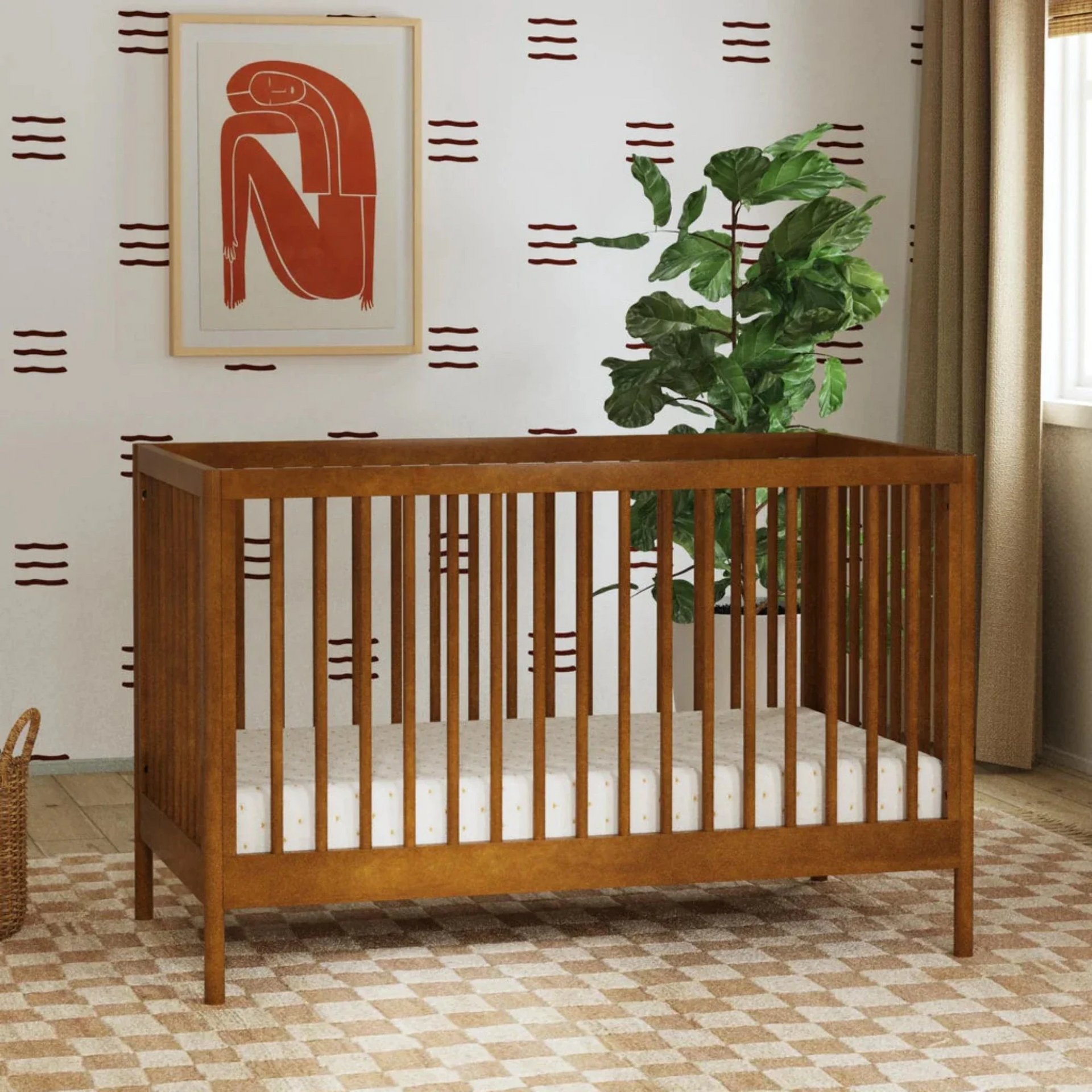
What is a convertible crib and is it worth it?

A convertible crib transitions through multiple configurations — typically from crib to toddler bed to daybed, with 4-in-1 models extending to a full-size bed. For most families, the long-term value is compelling: one purchase covers multiple childhood stages rather than requiring separate furniture pieces over time. The total cost of a 4-in-1 convertible crib plus conversion kit is typically lower than the cost of replacing beds as your child grows. Confirm whether the conversion kit is included or sold separately before purchasing. Our team at Kido BĂ©bĂ©'s Montreal showroom can show you which conversion configurations fit your nursery dimensions.

What size is a standard crib mattress in Canada?

A standard full-size crib mattress in Canada measures approximately 131 cm long by 69 cm wide, as regulated under SOR/2016-152. Maximum mattress thickness is 15 cm per the same regulation. The gap between the mattress and the crib interior wall must not exceed 3 cm on any side — a gap larger than this creates an infant entrapment risk that Health Canada's regulations are specifically designed to prevent. Always confirm the mattress label reads "standard" or "full-size" before purchasing. Kido BĂ©bĂ© carries crib mattresses sized to Canadian specifications, compatible with the cribs in our collection.

When should I lower the crib mattress?

Start at the highest mattress position when your baby is a newborn and cannot yet roll or push up — this also reduces bending strain during nighttime feeds. Lower to the middle position when your baby begins pushing up on hands and knees, typically around 5 to 6 months. Lower to the lowest position before your baby can pull themselves to a standing position, generally between 8 and 12 months. Most cribs offer three height positions; some premium models offer four for more gradual adjustment. Check all hardware for tightness at every adjustment, as bolts can loosen with regular use over time.

Are bumper pads safe in Canadian cribs?

Bumper pads are not recommended by the Canadian Paediatric Society for any infant crib — including mesh or breathable versions marketed as safer alternatives. The risk of suffocation, entrapment, and strangulation outweighs any perceived benefit, and there is no evidence that bumper pads prevent injury. Health Canada advises that only a firm, flat sleep surface and a tightly fitted sheet belong in an infant's sleep space. If you received crib bumpers as a shower gift, store them rather than using them. If you have questions about slat spacing on a specific model, our Kido BĂ©bĂ© team can advise on compliant options in-store.

Drawer Title
Produits similaires